From the kitchen
The Phở Bowl blog
Stories, guides, and what's new on the stove at 106 Hancock Bridge Pkwy.
Chef's specialJuly 2026
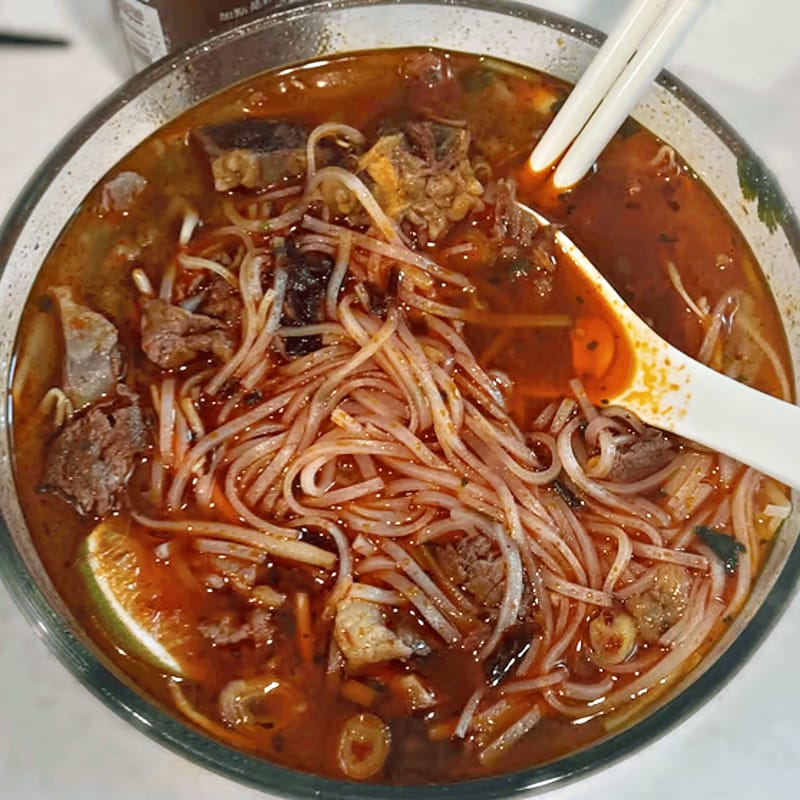
Phở Đuôi Bò: the bowl on the cover
Oxtail is what happens when you give the toughest cut all the time it asks for.
Oxtail phở is a different animal from the everyday bowl. The tail is nearly all bone, marrow, and connective tissue — which means on a fast stove it's inedible, and on a slow one it becomes the deepest, silkiest broth a phở pot can make. The collagen melts, the marrow lets go, and the meat slips off the bone on its own.
№ 63 on the menu
$20 one size only
≈740 calories (estimate)
How to eat it: give the bowl one minute before you touch anything — oxtail broth carries more heat than it looks like it does. Then basil, a squeeze of lime, sprouts if you like the crunch. Try the first spoonfuls of broth before adding sauce; this one earns it.
Fair warning: one-size specials like this can run out on busy evenings. Ordering ahead for pickup is the safe move.
GuideJuly 2026
First time at a phở shop? Your 2-minute guide
No wrong answers here — but here's how regulars do it.
1. Order by the number. Every dish has one — "a 41, large" works perfectly. Phở bowls 41–51 are $14.99 regular, $17.99 large, and the difference between them is just which toppings ride in the broth.
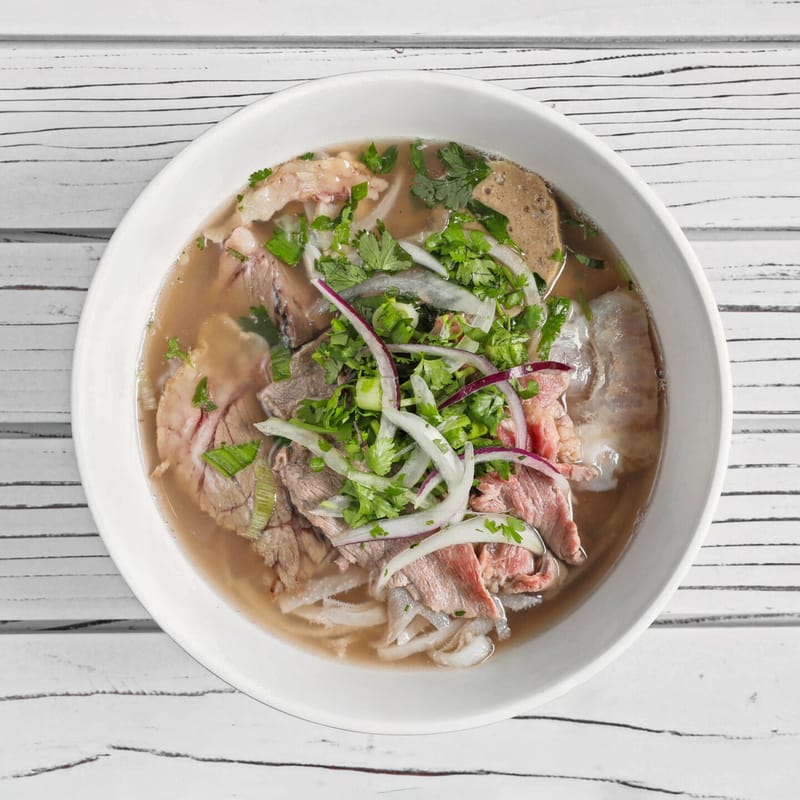
2. Good starter bowls. Never had phở? Start with 41 Phở Tái (ribeye — the classic), 49 Phở Gà (chicken, lightest of the beef-broth bowls), or 60 Vegetable Phở (true vegetarian broth). Feeling brave? 40 Đặc Biệt is the everything bowl.
3. The garnish plate is yours. Thai basil, bean sprouts, jalapeño, lime — tear the basil, squeeze the lime, drop in as much or little as you like. Taste the broth first, then adjust with hoisin (sweet) or sriracha (heat).
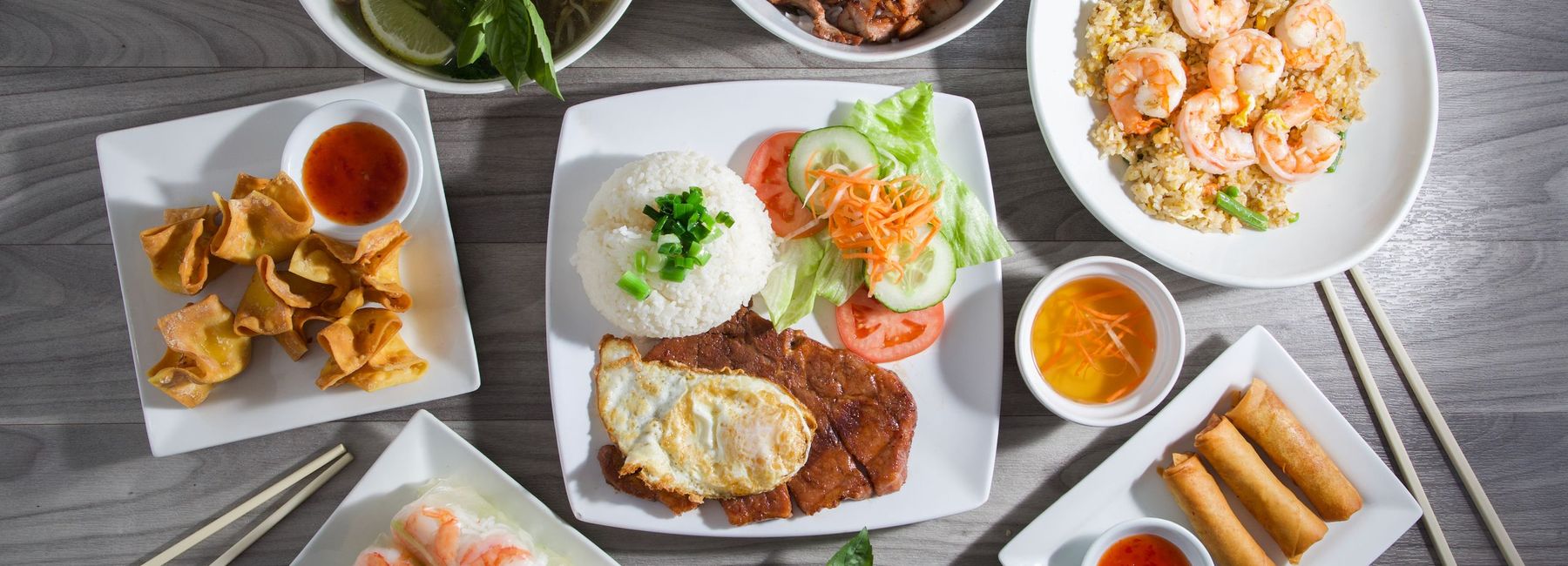
4. Not a soup person? Bún bowls (27–32) are the same grilled meats over cool vermicelli noodles — great in Florida heat. Cơm plates (33–39A) put them over jasmine rice with a fried egg option. And the Bánh Mì at $8.99 might be lunch's best deal in Cape Coral.
5. Chopsticks in the right hand, spoon in the left (or however works). Noodles with the sticks, broth with the spoon, and yes — lifting the bowl for the last of the broth is a compliment to the kitchen.